Anúncios
Implementing the top 5 tactics to cut transportation costs by up to 25% in Brazil in 2025 is key to optimizing your budget and adopting new, efficient and sustainable mobility solutions.
Anúncios
Planning urban mobility and finding ways to reduce transportation costs has become a priority for many Brazilians. With costs constantly rising and a growing push for sustainability, understanding the best tactics to save in this area is essential. This article details the five most effective strategies to lower your commuting expenses by up to 25% in Brazil by 2025, covering new mobility solutions that promise to transform the way we get around.
Anúncios
The current state of transportation in Brazil and the need to save
Brazil, with its vast territory and complex urban areas, faces significant challenges in the transportation sector. The costs of fuel, vehicle maintenance and public transit fares weigh heavily on household and business budgets. The search for cheaper, more efficient alternatives is not just a financial matter, but also one of quality of life and environmental impact.
Existing infrastructure often fails to keep pace with population growth and travel demand, resulting in traffic jams and more time spent on the road. This scenario drives the need to rethink mobility, seeking solutions that combine convenience, savings and sustainability. Technological innovation and changing habits are key pieces of this transformation. Understanding how these changes can be applied in everyday life is the first step toward real, lasting savings.
Challenges and opportunities in Brazilian transportation
There are many challenges, from dependence on private motorized transport to the lack of integration between modes of transportation. However, every challenge is an opportunity to innovate and implement new tactics. Awareness of environmental impact and the value placed on personal time are driving the adoption of smarter mobility practices.
- Constantly rising fuel prices.
- High maintenance costs for private vehicles.
- Inadequate public transportation infrastructure in many regions.
- Growing concern about sustainability and environmental impact.
Despite the obstacles, Brazil has enormous potential to adopt and develop new mobility solutions. Brazilians’ creativity and adaptability, combined with technological progress, can create a more efficient and affordable transportation landscape in the coming years. The key is to explore these opportunities in a strategic, informed way.
In short, the current context calls for a thorough review of transportation habits. Savings are not the only benefit; a better quality of life, less pollution and better use of time are additional gains that justify investing in new approaches to mobility. Keeping up with trends and applying the right tactics can make a substantial difference.
Tactic 1: Making the most of ride-hailing and carpooling apps
The first tactic for significantly reducing transportation costs involves making smarter use of ride-hailing apps and embracing carpooling. Platforms like Uber, 99 and similar services are already part of daily life for millions of Brazilians, but using these resources wisely can generate substantial savings.
Instead of using these services individually and indiscriminately, the strategy is to plan your trips, choose the cheaper ride categories, take advantage of promotions and, above all, use the shared ride option. Splitting the cost of a trip with other passengers heading along similar routes can cut your expenses in half or more.
Planning and smart choices
Planning is crucial. Before requesting a car, check prices across different apps and consider peak hours, which usually come with higher surge pricing. If possible, adjust your schedule to avoid these peaks and save. Planning ahead can be a great ally in cutting costs.
- Compare prices across different ride-hailing apps.
- Use shared ride options whenever possible.
- Avoid peak hours to escape surge pricing.
- Take advantage of discount coupons and loyalty programs.
In addition to traditional apps, there are platforms dedicated to carpooling, such as BlaBlaCar, which connect drivers and passengers who need to make medium- and long-distance trips. These platforms are great for cutting the cost of intercity or interstate travel by splitting fuel and toll expenses. Flexibility and savings are their main draws.
Adopting this tactic is not just about saving money, but also about making better use of the vehicles on the road, helping reduce traffic and pollutant emissions. It is a solution that benefits both the consumer’s wallet and the environment, promoting smarter, more collaborative mobility. Building these practices into your daily routine can produce notable savings by 2025.
Tactic 2: Investing in active mobility and micromobility
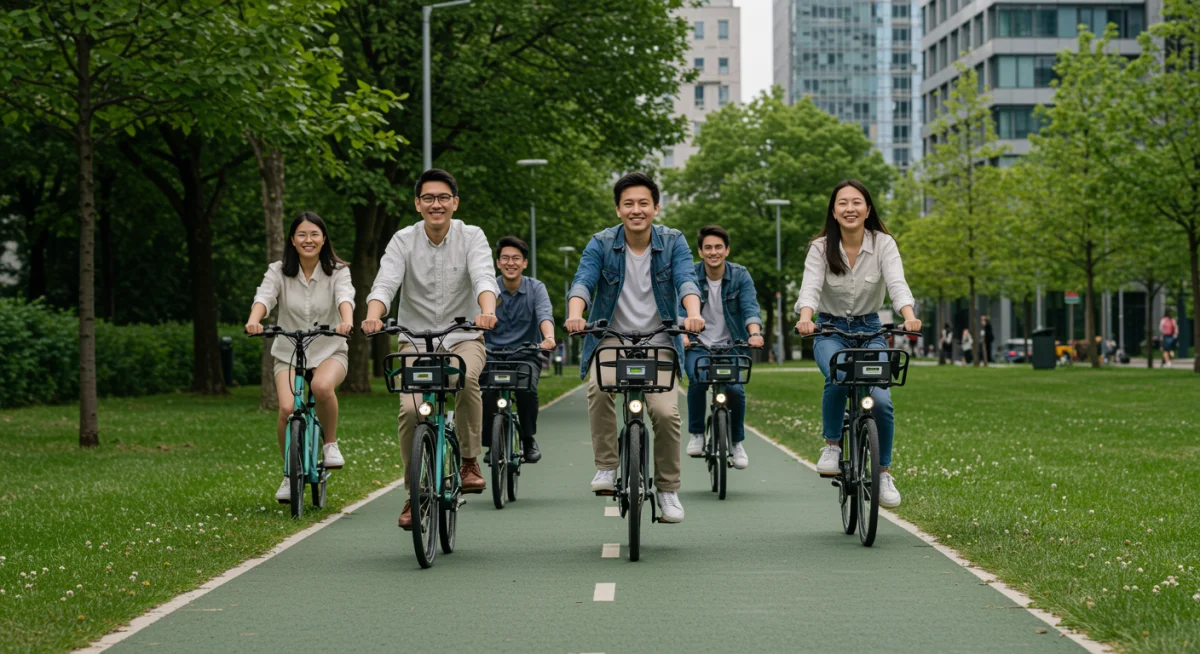
The second tactic focuses on active mobility and micromobility, which are gaining more and more ground in Brazilian cities. Walking, cycling and riding electric scooters are alternatives that are not only cheap, but also good for your health and the environment. For short and medium distances, these options can replace the car or public transit, generating considerable savings.
Investing in a bicycle, whether your own or through bike-sharing systems, or using electric scooters, can eliminate spending on fuel, parking and fares. Many cities already offer infrastructure for these options, such as bike paths and bike lanes, making them viable and safe choices for the daily commute.
Benefits of active mobility
The benefits go beyond financial savings. Regular physical activity, such as walking and cycling, helps improve cardiovascular and mental health. In addition, relying less on motor vehicles shrinks your carbon footprint, contributing to a more sustainable future. It is a choice that has a positive impact on many areas of life.
- Lower fuel and parking costs.
- Better physical and mental health.
- Helps reduce air pollution.
- Less time spent stuck in traffic.
Micromobility, with shared electric scooters and e-bikes, is an excellent option for those who don’t want to buy their own vehicle or who need something to complement public transit. These services, usually charged by usage time, are ideal for the “last mile” of a trip, connecting users from the bus or subway station to their final destination.
Combining active mobility and micromobility with public transit is a powerful strategy. Pairing walking or cycling with the subway or bus can optimize travel time and cut costs dramatically. It is an intermodal vision of mobility that aligns with global trends toward smart, sustainable cities.
Tactic 3: Switching to electric and hybrid vehicles
The third tactic, with a medium- to long-term horizon, is switching to electric and hybrid vehicles. Although the upfront investment may be higher, the operating costs of these vehicles are significantly lower than those of combustion vehicles, especially given Brazil’s high fuel prices.
Electric cars completely eliminate spending on gasoline or ethanol, relying only on electric charging, which is cheaper. Hybrids, in turn, combine an electric motor with a combustion engine, providing greater range and substantial fuel savings. The battery is recharged by the vehicle itself or by external sources.
Incentives and long-term savings
State and municipal governments in Brazil already offer incentives for buying and using electric and hybrid vehicles, such as IPVA (vehicle tax) exemptions, reduced fees and even permission to drive in restricted traffic zones. These benefits, combined with fuel savings, make this option increasingly attractive.
- Significant fuel savings.
- Lower taxes and fees (IPVA, licensing).
- Lower maintenance costs thanks to mechanical simplicity.
- Contributes to environmental sustainability.
Charging infrastructure for electric vehicles is expanding in Brazil, with charging stations at malls, parking lots and even homes. Battery technology is also advancing quickly, increasing vehicle range and reducing charging time. This makes the transition to electric mobility more practical and accessible.
Looking at 2025, the trend is for electric and hybrid vehicle prices to become more competitive and for charging infrastructure to become more robust. For those seeking a drastic long-term reduction in transportation costs who are willing to make an upfront investment, this tactic is extremely promising and in line with global sustainability goals.
Tactic 4: Flexible work and remote work
The fourth tactic for reducing transportation costs is flexible work arrangements and remote work, or working from home. The COVID-19 pandemic accelerated the adoption of these arrangements at many companies, proving their effectiveness and their benefits for both employees and employers. Cutting the number of days you commute to work has a direct impact on your budget.
Working from home completely eliminates the need to spend on fuel, bus or subway fares, and even lunches out. Even a hybrid model, with just two or three work-from-home days a week, generates considerable savings over the month and the year. Plus, the time saved on the commute can be put toward quality of life or productivity.
The impact of remote work on household finances
Remote work not only cuts direct transportation costs, but also reduces indirect expenses. Fewer trips mean less wear and tear on your vehicle, less maintenance and fewer tires. For public transit users, the savings are just as significant, since there’s no need to buy passes or credits every day.
- No more spending on fuel or fares.
- Less wear and maintenance on your personal vehicle.
- Savings on eating out.
- More free time and a better quality of life.
Companies that adopt remote or hybrid work also benefit, with lower operating costs related to office upkeep and energy consumption. In addition, flexibility can boost employee satisfaction and productivity, as people feel more valued and more in control of their routine.
For 2025, remote work is expected to remain a relevant option in the job market. Negotiating with your employer for the possibility of working remotely, even just a few days a week, can be one of the most effective strategies to reduce transportation costs and optimize your personal and household budget.
Tactic 5: Integrating and planning public transportation
The fifth essential tactic for reducing transportation costs is integrating and smartly planning your use of public transportation. In many Brazilian cities, despite its shortcomings, public transit is still the cheapest option and, in some cases, the most efficient way to get around. The key is knowing how to use it in the best way.
Integration between different modes, such as buses, subways, trains and light rail, lets you make long trips on a single fare or at reduced fares, taking advantage of unified ticket systems or transit cards. Planning your routes ahead of time with navigation apps that provide schedules and connections can help you avoid unnecessary spending and optimize travel time.
Advantages of well-planned public transportation
Beyond the savings, public transportation, when used well, offers other advantages. It helps reduce the number of cars on the road, easing congestion and pollution. It lets passengers use their travel time for other activities, such as reading, studying or working, turning lost time into productive time.
- Significant savings on fuel and parking.
- Less traffic-related stress.
- The chance to do other things during the trip.
- Contributes to sustainable urban mobility.
Many cities are investing in public transit improvements, creating dedicated bus corridors (BRTs), expanding subway and train lines, and modernizing their fleets. Keeping up with these improvements and adapting to new routes and integration systems can be essential to maximizing the savings and efficiency of your trips.
For 2025, public transportation systems are expected to become even more integrated and efficient, especially in large metropolitan areas. Staying on top of new developments and planning your trips around the available options is a smart tactic for anyone looking to reduce transportation costs without sacrificing quality of life. Combining public transit with active mobility (walking, cycling) is a winning formula for saving money.
New mobility solutions and their future impact
Beyond the tactics already mentioned, the mobility landscape in Brazil is constantly evolving, with new solutions emerging that promise to further transform the way we get around. These innovations, often driven by technology and the pursuit of sustainability, will have a significant impact on reducing transportation costs in the coming years.
Among the trends, autonomous vehicles stand out, as they can optimize traffic flow and reduce the need for drivers, lowering operating costs. Although they are still in the testing and regulatory phase, the arrival of these vehicles in Brazil is only a matter of time and will bring new opportunities for savings and efficiency in both public and private transportation.
Innovations and trends for 2025 and beyond
Another high-impact area is the development of electric and low-emission modes for freight transport, which can make logistics cheaper and, consequently, lower product prices. The electrification of delivery and passenger transport fleets is a reality that will expand rapidly.
- Growth of car subscription services.
- New electric micromobility options.
- Advances in autonomous vehicle technology.
- Electrification of public transit and freight fleets.
The spread of car subscription and short-term rental services also offers an interesting alternative for those who need a vehicle occasionally, without bearing the fixed costs of ownership. These business models provide access to modern, well-maintained vehicles while paying only for the time used, which can be much cheaper than owning a car, depending on how often you drive.
Furthermore, data integration and artificial intelligence will be crucial for optimizing routes, forecasting demand and managing fleets more efficiently, both in public transit and in app-based services. This optimization will result in lower costs and greater convenience for users, establishing new mobility solutions as pillars of transportation savings in Brazil through 2025 and the years that follow.
| Main Tactic | Brief Description |
|---|---|
| Apps and Carpooling | Make the most of ride-hailing apps and shared rides to lower the cost per trip. |
| Active Mobility | Walk, bike and use scooters for short and medium distances, saving on fuel and fares. |
| Electric/Hybrid Vehicles | Invest in electric or hybrid cars to lower operating costs and take advantage of incentives. |
| Remote Work and Flexibility | Adopt work-from-home or hybrid work to eliminate daily commuting expenses. |
Frequently asked questions about reducing transportation costs
The main benefits include a significant reduction in travel costs, since you split the fare with other passengers. It also helps reduce traffic and pollutant emissions, promoting more sustainable mobility and making better use of vehicles on city streets.
Active mobility, such as walking or cycling, has a positive effect on your finances by eliminating spending on fuel, parking and public transit fares. Health-wise, it helps improve your fitness, reduce stress and boost overall well-being, combining savings with quality of life.
Yes, investing in an electric or hybrid vehicle in Brazil can really pay off in the long run. Despite the higher upfront cost, the fuel savings are substantial, and there are tax incentives such as IPVA exemptions. Maintenance is also generally simpler and cheaper, contributing to an overall reduction in costs.
Remote work, or working from home, directly helps you save by eliminating daily commuting expenses such as fuel, fares and parking. It also reduces vehicle wear and maintenance costs, freeing up a significant share of the household budget that previously went to transportation.
To make better use of public transportation and save money, use unified ticket systems and plan your routes with apps to take advantage of connections between modes (bus, subway, train). Avoid peak hours when possible and combine public transit with active mobility for the “last mile,” maximizing efficiency and reducing costs.
Conclusion: A future of affordable, mindful mobility
The five tactics presented to reduce transportation costs by up to 25% in Brazil in 2025 offer a clear path toward smarter financial management and more sustainable mobility. From making the most of ride-hailing and carpooling apps to investing in electric vehicles and flexible work, each strategy offers tangible benefits that go beyond simple monetary savings. Integrating public transit and embracing active mobility round out the picture, promoting a healthier, more environmentally responsible lifestyle. The new mobility solutions emerging, driven by technology, promise a future in which getting around will be not only cheaper, but also more efficient and better aligned with the needs of an ever-changing world. Adopting these practices is a fundamental step toward transforming transportation in Brazil and improving everyone’s quality of life.